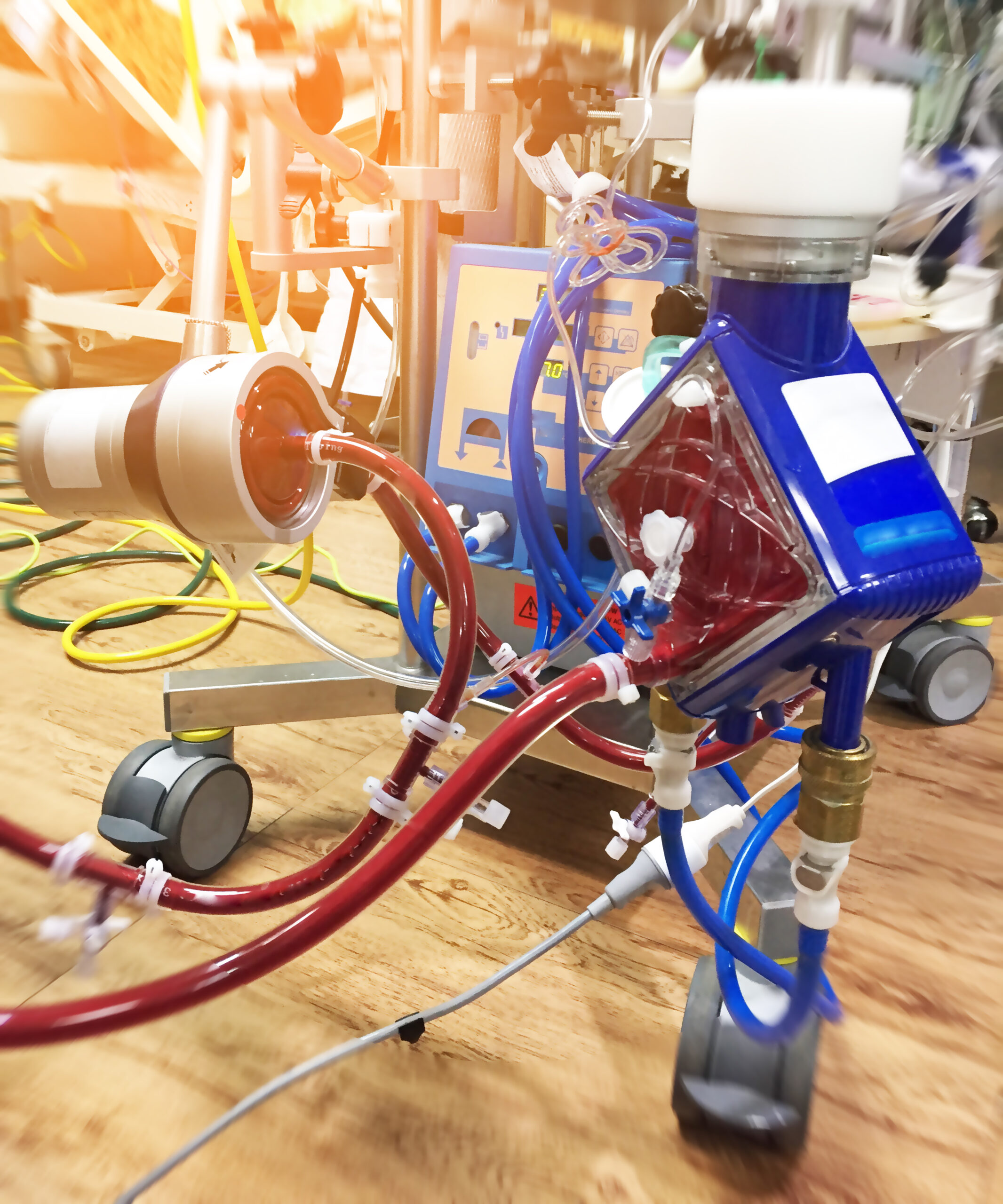
The function of some failing organs can already be replaced by machines. An example is the widely known dialysis, which is intended for people with kidney failure. Similarly, the function of the heart or lungs can also be replaced.
ECMO (extracorporeal membrane oxygenation) is most commonly used for this purpose. It may seem like a revolutionary innovation that only appeared during the COVID-19 pandemic. In fact, however, it has been in clinical use since 1975. ECMO is connected to the patient’s blood circulation via large vessels in the groin. Deoxygenated blood flows into the device through the drainage part, where it is oxygenated and returned. Patients connected to ECMO must be in intensive care, but they do not have to be sedated; some of them even read or talk on the phone during treatment. Nevertheless, it is a demanding process with a high risk of complications. These often arise from the fact that blood clots very easily in the device’s circuit. Patients are therefore given substances that reduce blood clotting. However, it is difficult to fine-tune the ideal level of blood clotting reduction. The problem is therefore thrombosis on the one hand and bleeding on the other. Mechanical circulatory support is then continued until the patient’s own organs resume functioning, until surgery or intervention is performed, or until a transplant is carried out, for example.
ECMO (extracorporeal membrane oxygenation) is most commonly used for this purpose. It may seem like a revolutionary innovation that only appeared during the COVID-19 pandemic. In fact, however, it has been in clinical use since 1975. ECMO is connected to the patient’s blood circulation via large vessels in the groin. Deoxygenated blood flows into the device through the drainage part, where it is oxygenated and returned. Patients connected to ECMO must be in intensive care, but they do not have to be sedated; some of them even read or talk on the phone during treatment. Nevertheless, it is a demanding process with a high risk of complications. These often arise from the fact that blood clots very easily in the device’s circuit. Patients are therefore given substances that reduce blood clotting. However, it is difficult to fine-tune the ideal level of blood clotting reduction. The problem is therefore thrombosis on the one hand and bleeding on the other. Mechanical circulatory support is then continued until the patient’s own organs resume functioning, until surgery or intervention is performed, or until a transplant is carried out, for example.
Other options for mechanical circulatory support include heart pumps and other devices that are inserted either via catheterization through a small hole in the groin or during open-chest surgery. Some of these devices can be inserted long-term, allowing patients to function outside of the hospital. An example is the Heart Mate device, in which the pump is inserted directly into the heart and the control unit is worn at the waist. Such devices are mostly used in heart transplant candidates who are waiting for a suitable organ to become available. In selected cases, however, they can also be inserted permanently.
Links: